rage platformer · one game, three machines
FIDATI.
The intro promises: "there will be jumping. a lot. relax." That's the first lie. A rage platformer that lies to you, with honest rules: every betrayal can be learned. 10 playable worlds, all still in draft form.
no bitmaps. just code
The story, in short
FIDATI. was born in HTML5, my home turf: there it's easy to try an idea and watch it behave, and there the game keeps growing, in features and in depth. The prototype also guides the retro tests: on the C64 everything in 6502 assembly, line by line; on the Mega Drive 68k assembly for the skeleton and C for the logic, the way it was done back then. One principle never changes, on any machine: no bitmaps, no external assets. All the graphics are generated from code. Nothing is for sale: just an experience to share.
Physics with feel first: coyote time, jump buffering, variable jump. Arcade scoring with 3-initial signing and 4-letter world codes, like it's 1991. A gun you don't find: you earn it.
The 10 settings
The game moves through ten different settings, each with its own look and its own betrayal: from geometric space to the mountain, from Mars to Venus, all the way to the alien city and the Inferno. All playable, still in draft form. Here is just a taste.
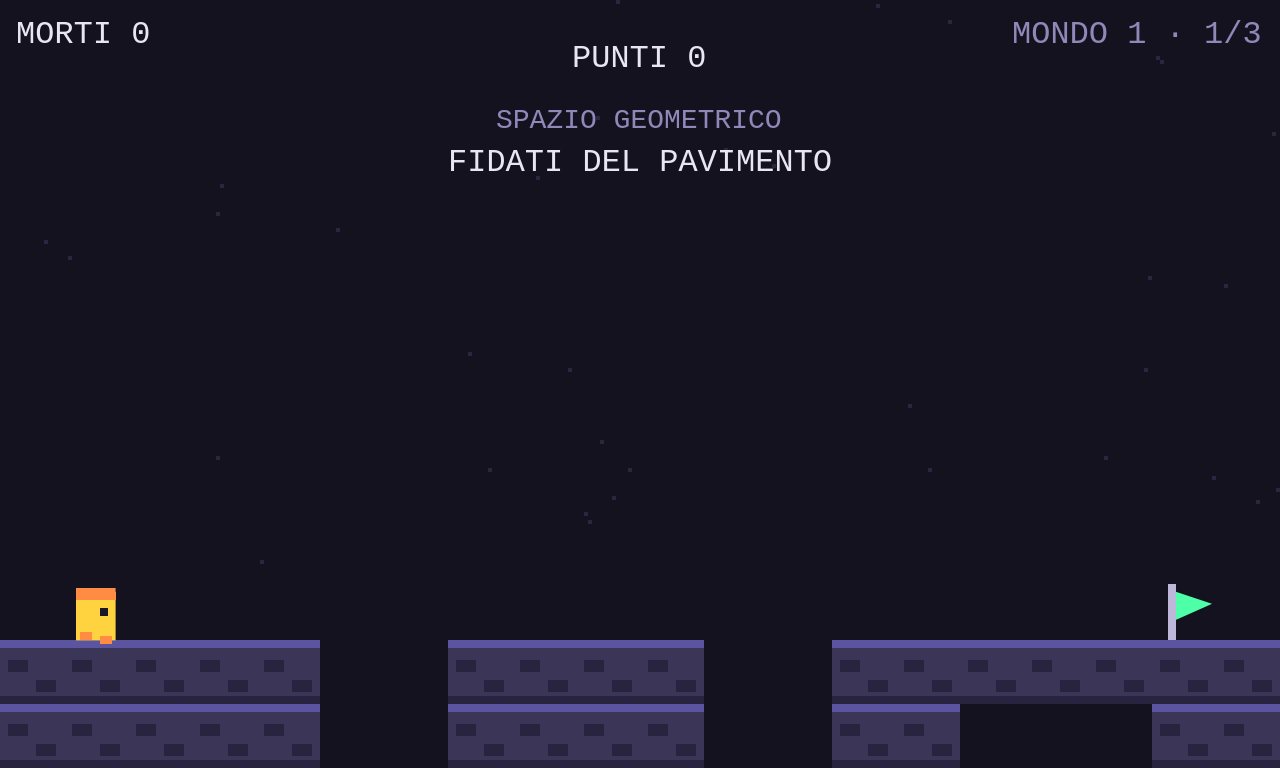
Geometric Space
The tutorial. It teaches you to jump, to fall and, above all, to trust nothing. What exactly? That would be a spoiler.
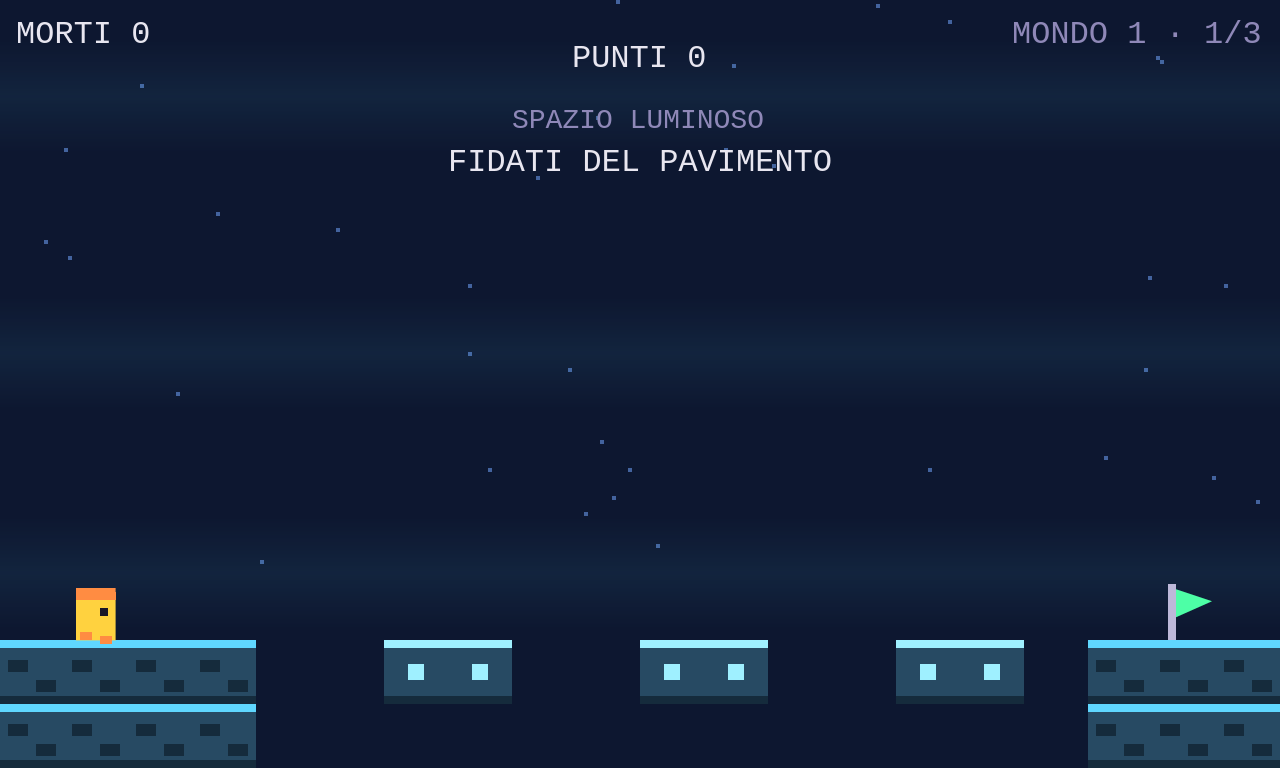
Luminous Space
Platforms that blink in and out to a rhythm you can learn. More or less.
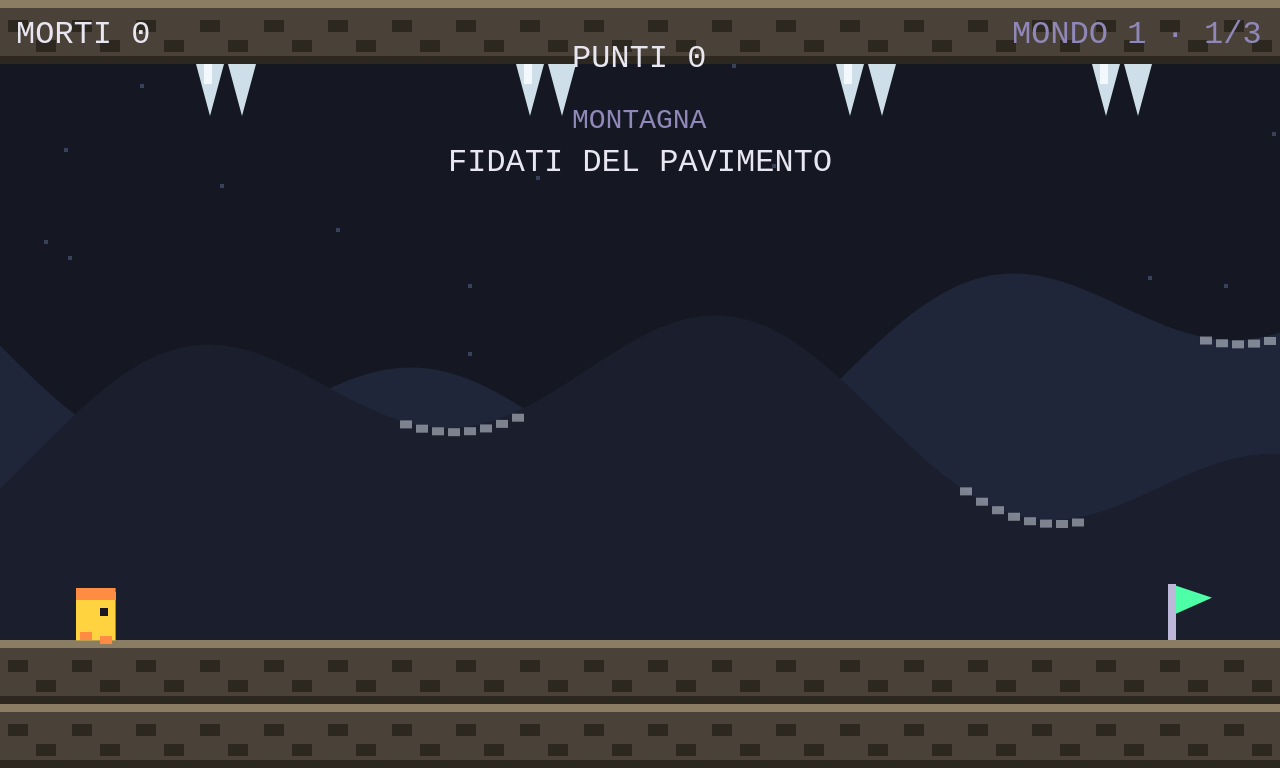
Mountain
Here the danger doesn't come from where you expect. You get one instant to notice.
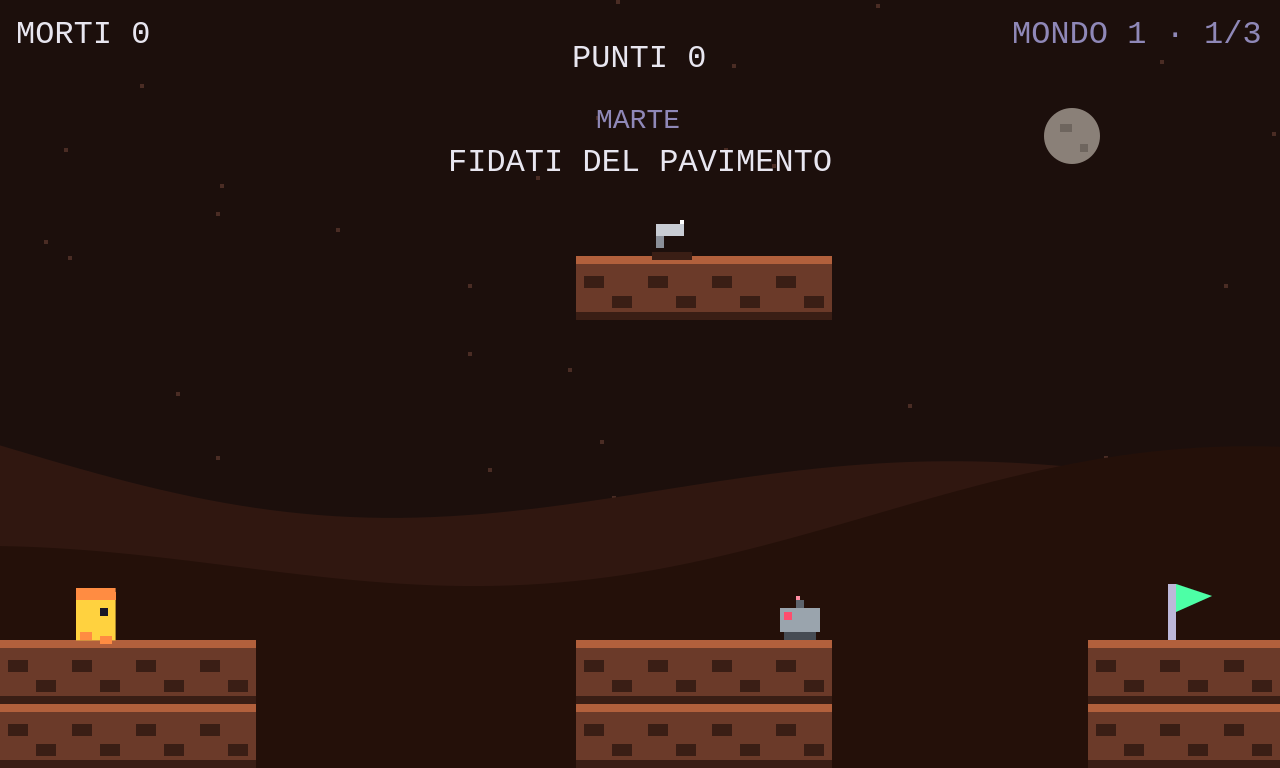
Mars
Gravity on sale: your muscle memory needs retraining. And word is, there's a gun around here.
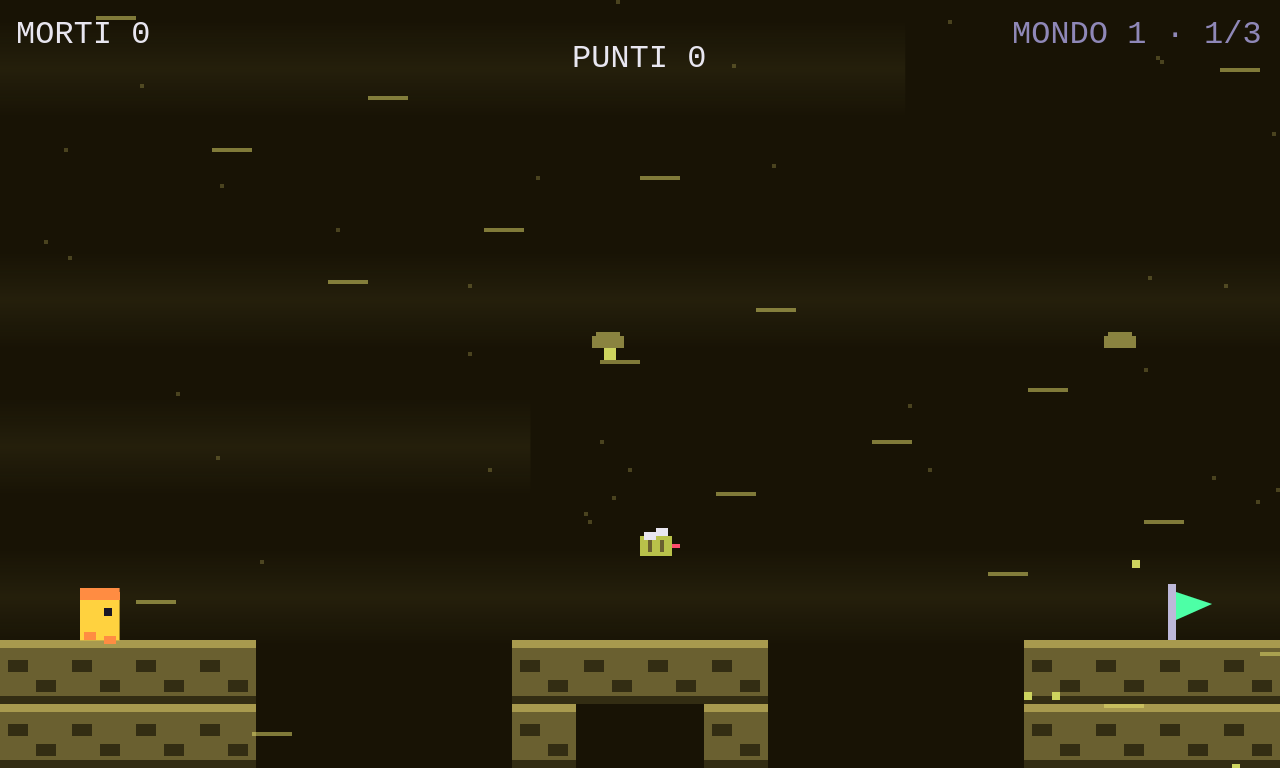
Venus
The wind is in charge, over you and everything that flies. Nothing here is found: it's earned.
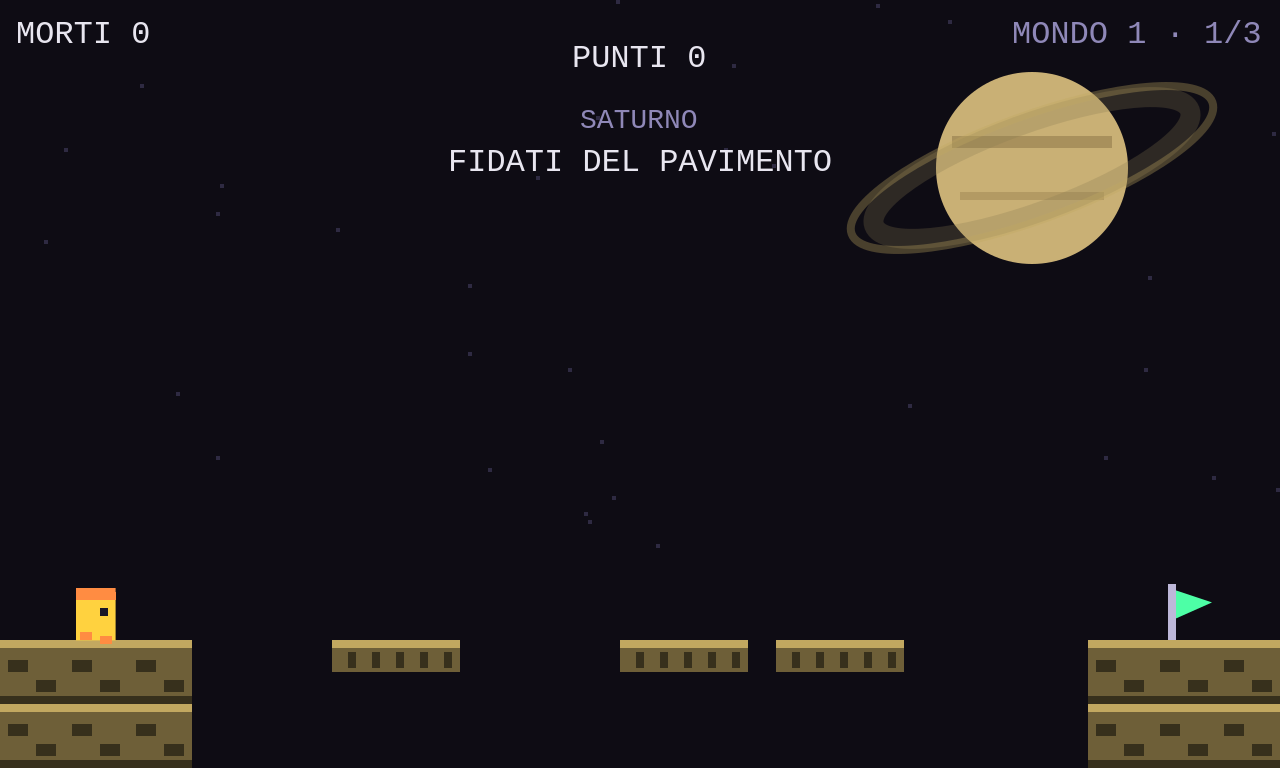
Saturn
The rings take you where you need to go. Don't stop to think.
Jungle
Some platforms have teeth.
in playtestFuturistic City
The teleporters tell you where they lead. They tell you.
in playtestAlien City
The signage is perfectly clear. Shame.
in playtest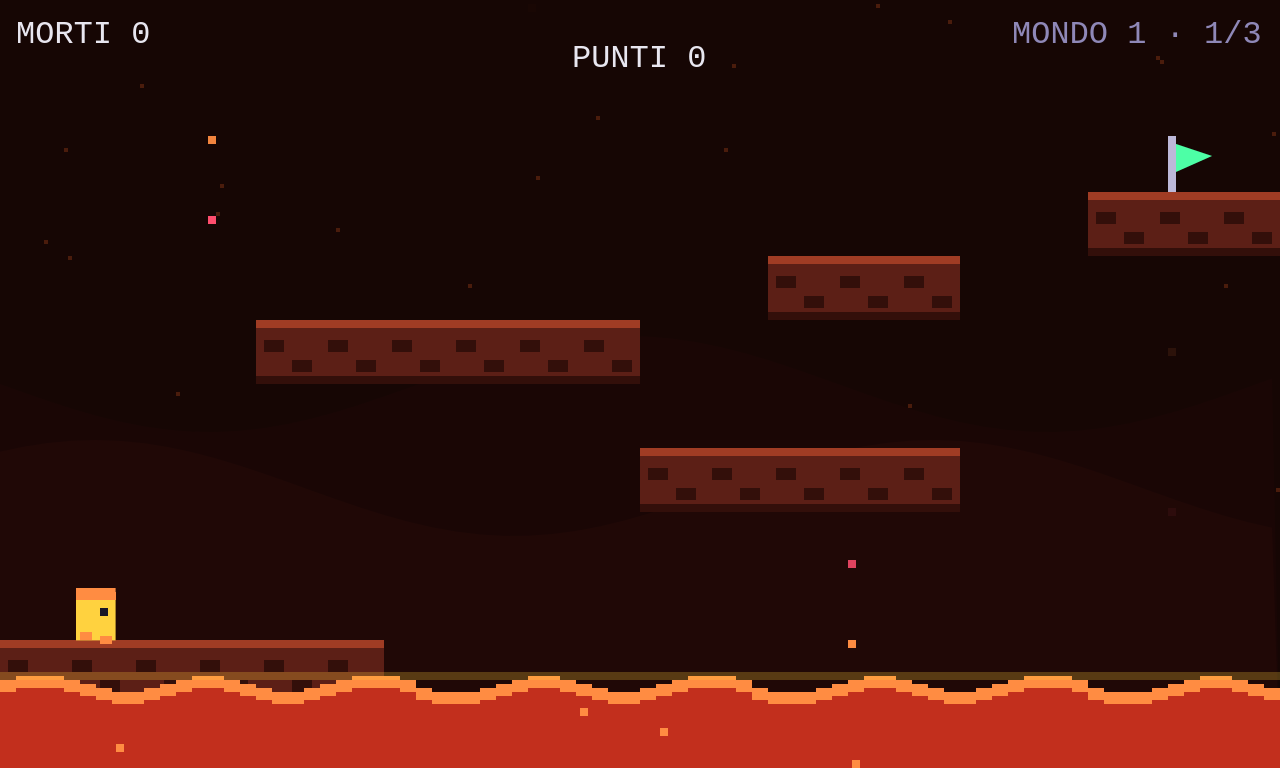 in playtest
Inferno
Every lie at once, and the lava is rising.
in playtestUnder the hood
No bitmaps, no external graphic assets: all the graphics come from code. In HTML5, sprites, tiles and levels are drawn in code and the sounds synthesized in WebAudio, in a single file under 50KB. On the C64 the character set and sprites are defined byte by byte in 6502 assembly; on the Mega Drive the tiles and sprites are generated from code, not imported from images. Every pixel, on every machine, is programmed. Part style choice, part necessity: at drawing by hand, honestly, I'm no good.
The builds: play or download
One game, three machines. Same gameplay, set by the prototype; three ways to try it.

HTML5
the prototype · v0.1210 playable worlds, all still in draft form. Runs in any browser, desktop and mobile, keyboard or touch, and grows build after build.

Commodore 64
the V2 campaign · v0.0.11All 6502 assembly, line by line: 2 World 1 levels, 6 screens in total, SID music. A PRG for emulators and real hardware.

Mega Drive
the V2 campaign · v0.0.1168k assembly and C, period-style: the V2 campaign, with the same gameplay as the prototype. A ROM for emulators and flashcarts.